Sunday, October 12, 2014

Lakbay Patungong Quezon


ABOUT THE PROVINCE

I do not think that it is a coincidence, but the next province that I am going to be posting about is named after a famous person again. It is about the province of Quezon.

Image source: Quezon Gov't

The province was formerly known as Tayabas. In 1591, Tayabas was created into a province under the name of Kalilayan. Its capital was the ancient town of Tayabas, now a barrio in the town of Unisan where ancient tombs and artifacts can be found.


In September 7, 1947, former President Manuel Roxas renamed the province to Quezon, in honor of the late President Manuel L. Quezon who was said to be the most illustrious son of Baler, formerly part of Quezon.

The province of Quezon, although close to the urban Metropolitan Manila, maintained its rich culture and traditions. It is the place to be when you want to escape the bustling city of Manila. It has the both aspects of natural and cultural tourist attractions.

It is where Mount Banahaw is located, a 7,382-feet extinct volcano which is famous for its mystical attributes. During Holy Week, religious rituals are practiced by pilgrims who believed that Christ walked on that mountain.
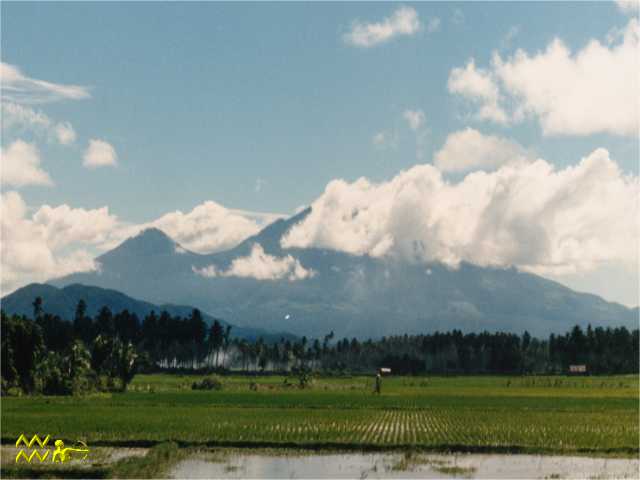
Image source: Malapascua Island

It also has Polilio Islands to boast its beauty. Bird Island in Polillo, Lamon Bay, Puting Buhangin Beach in Pagbilao Grande… Just by hearing the names of these tourist attractions, you can already imagine what can be found in the area, diverse bird species, various living corals, and a white sand beach. It is the perfect place for a summer getaway.
Image source: Lakwatsera de Primera

The province of Quezon is also famous for Pahiyas Festival, noted as one of the best harvest festivals in the country. It is a colourful celebration and is celebrated to give thanks for a bountiful harvest in honor of San Isidro de Labrador. It is observed in the towns of Lucban, Candelaria, Tayabas, Sariaya, Tiaong, and Lucena City.

Image source: Pinoy Adventurista


GEOGRAPHY

The province is composed of 41 towns and one highly urbanized city, which is Lucena City. The province has 1,248 barangays, which include the barangay of Lucena City.

Quezon is one of the biggest provinces in the Southern Tagalog region in terms of land area. It is bordered by the province of Aurora in the north and Camarines Sur in the south. It is bounded on the west by the provinces of Aurora, Nueva Ecija, Bulacan, Rizal, Laguna, and Batangas and on the southeast by Camarines Norte and Camarines Sur.

CLIMATE 

It has a mild-tropical climate. It also has two-pronounced seasons: the dry cold and dry-warm climate, and the cold moist and cold dry climate.


LANGUAGE

Tagalog is widely spoken in the province.

How to get there:

Travel time is 2-3 hours.

Via Private Vehicle
  • If you are from SLEx, take the Calamba exit then pass by the towns of Los Banos to Pagsanjan. You will take a right turn then left to Cavinti, Luisiana then Lucban. 
  • From Quezon City, there is also a route via Rizal Province.
(Source: http://www.backpackingphilippines.com/2011/05/how-to-get-to-lucban-quezon-map-commute.html)


Via Public Transportation
  • There are numerous bus lines that go from Metro Manila all the way to Quezon province. (e.g. Jac Liner, Philtranco, South Star, etc) Terminals for Jac Liner are located at Kamias, Quezon City and Gil Puyat.

Sources:

http://www.backpackingphilippines.com/2011/05/how-to-get-to-lucban-quezon-map-commute.html

http://www.tourism.gov.ph/SitePages/InteractiveSitesPage.aspx?siteID=24

http://www.quezon.gov.ph/homepage/index.php?info=aboutpage

Rizal


Image Source: Rudolph Musngi
When you have first read the title “Rizal”, most of you would have first thought that this blog post would be about the Philippines’ National Hero Dr. Jose Rizal. Well, you are almost right, but what I am talking about is the province of Rizal. Rizal was named in honour of our hero, Dr. Jose Rizal. It is also known as the “Cradle of Philippine Art”.

WHY? It is where Angono is located. Angono is the home of highly acclaimed artists and musicians, including two National Artists namely maestro Lucio San Pedro and painter Carlos Botong Francisco.

Having the advantage of being an urbanized area but still preserving its agricultural area, it offers diverse natural, cultural, and man-made attractions. From the scenic view of Sierra Madre Mountains to the breathtaking view of Laguna de Bay, one should not miss visiting Rizal at least once in their life. It also has swimming spots, picnic grounds, commercial centers, industrial parks, and convention halls.

Rizal also has a rich history that can be traced down even before the Spaniards came to the country.

The inhabitants of Rizal province of yore enjoyed the best of two shores — the seashore of Manila Bay on its western fringes with its famous sunset, and the lakeshore of Laguna de Bai at its eastern border, noted for its picturesque view of the Philippines’ largest inland body of water. Laguna de Bai named after the Laguna town of Bai, which used to be the biggest settlement along the western edge of Asia’s second largest freshwater basin, looks like the cavity of the human heart. The dagger-shaped Talim island lying in the middle divides the lake into two sections, along with three islets hugging the island’s coast. During the pre-Spanish times, the settlements located along the lakeshore of Laguna de Bai (Bay) and on the southern banks of the Pasig River were ruled by Rajah Soliman, nephew of Rajah Lakandula, the chief of Tondo.”

(Source: http://rizalprovince.ph/)

Image Source: Wikipedia
GEOGRAPHY

It is located near Metro Manila, making it as Metro Manila’s “closest eastern neighbour”. It is bordered by the province of Bulacan on the north, Quezon to the east, and Laguna to the south. It is a mountainous province located on the western slopes of the southern portion of Sierra Madre mountain range. Now, you will not wonder anymore why the roads go uphill when going to Rizal.

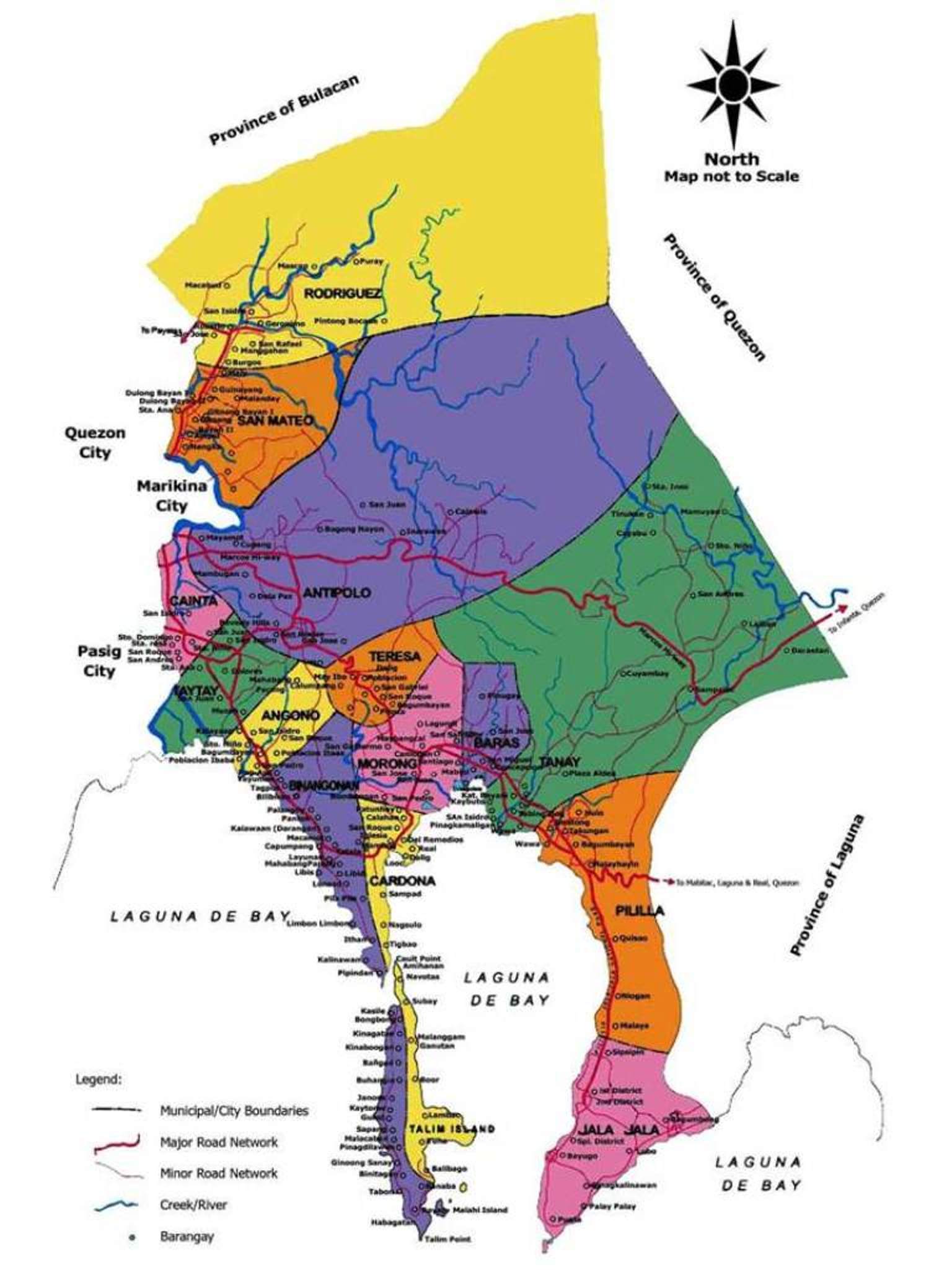
Rizal is subdivided in to 4 political districts, 13 municipalities, and one city. 

The First District consists of Antipolo City, Angono, Binangonan, Cainta, and Taytay.

The Second District consists of Baras, Cardona, Morong, Jalajala, Pililla, Rodriguez, San Mateo, Tanay, and Teresa.
 

You can see Bulacan, Laguna, and Quezon bordering the province of Rizal
Image source: Rizal Province

LANGUAGE

The predominant language is Tagalog while English is the second language. English is used as the medium of communication in education and business.


CLIMATE

Rizal only has the wet and dry seasons. It is relatively dry from December to May, and wet during the rest of the year. Northeast winds prevail in the province. It is said to be not directly hit by typhoons, low-pressure systems, and strong winds.


How to get there:

Estimated travel time: 1 hour and 05 minutes
The province is accessible from Manila via Ortigas Avenue, and from Quezon City via Marcos Highway and Sumulong Highway. 
Via private vehicles
1.    It can be accessed from Ninoy Aquino International Airport (NAIA-Pasay), through the following waypoints; NAIA Road turn right to Roxas Boulevard turn right to EDSA and then turn right at EDSA-Ortigas Avenue Interchange or from NAIA to Pres. Carlos P. Garcia Ave. (C5) turn right at C5-Ortigas Avenue Interchange going all the way to Rizal Province area.

2.    Another access point from Metro Manila is Aurora Boulevard to Marcos Hi-way going Cainta and Antipolo City. To get to the towns of San Mateo and Rodriguez (Montalban) use Commonwealth Avenue to Batasan-San Mateo Road as altenate route from Metro Manila.

3.    From the southern provinces use provincial roads entering SLEX, then turn right to SLEX and C5 Interchange or use the Laguna-Rizal Provincial Road as alternative route, and from northern provinces use North Luzon Expressway (NLEX) and turning left to EDSA at Clover Leaf Interchange you can turn left to Aurora Boulevard or at EDSA-Ortigas Avenue Interchange.

Via Public transportation
·         You can hop and drop to public utility vehicles like jeepneys or FX Taxis (AUVs) with terminals located in Crossing and SM Mega Mall in Mandaluyong City and in Cubao, Quezon City.
(Source: http://rizalprovince.ph/howtogethere.html)

Image Source: Rizal Province - Islands Philippines

Want to know more about the province of Rizal? Wait for next week’s blog post about 5 Best Things to do in Rizal!

Sources: